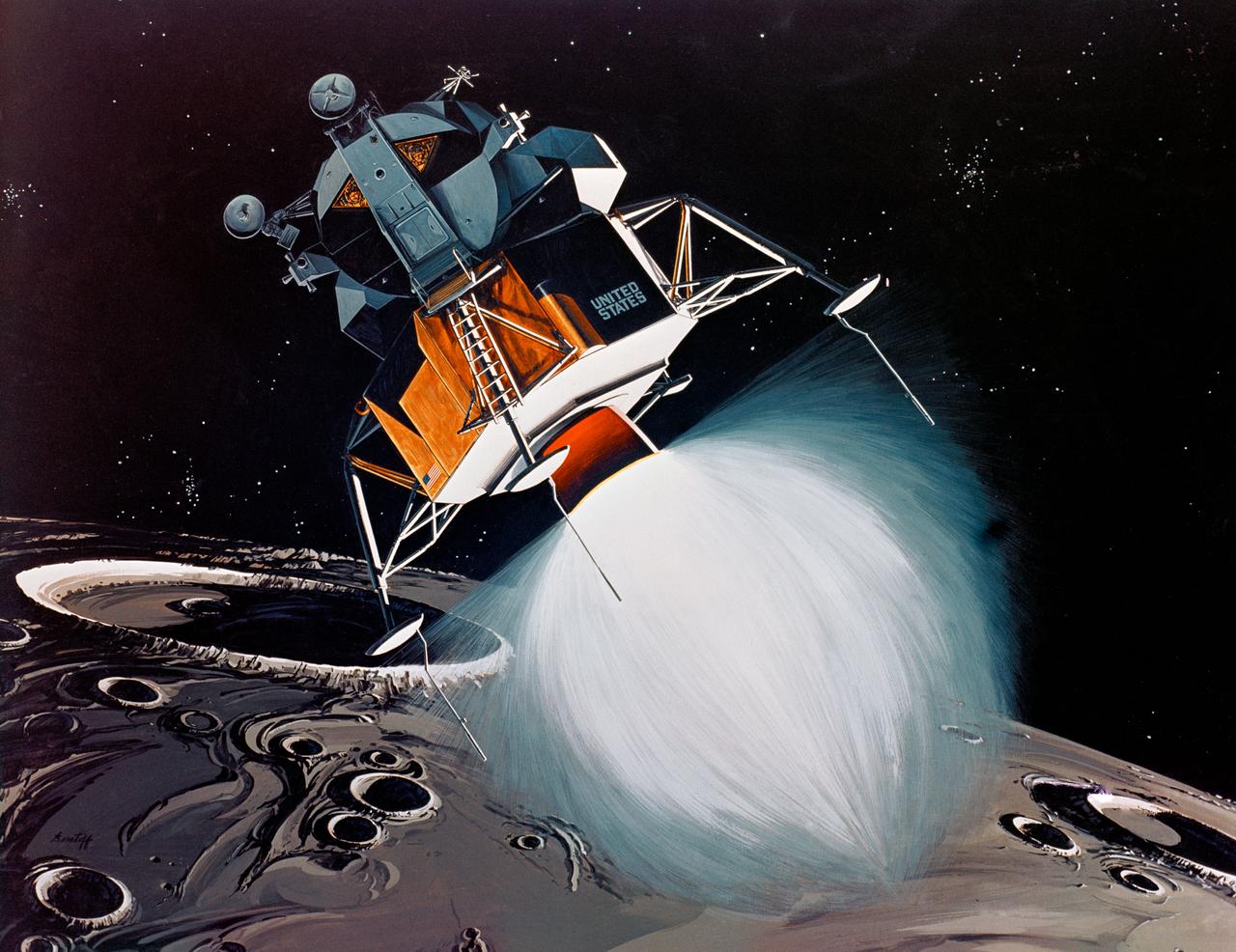
Everyone on the boards this week is talkin' about Apollo 11's guidance computer throwin' Alarm 1201 during the lunar descent. The consensus is poetic: the computer wasn't breaking — it was choosing. It was sheddin' low-priority tasks to keep the landing program alive. Capstone told the crew to keep descendin'. And they did.
I've read every word of that thread. And I want to tell you something from the driver's seat, because I think we're mislabelin' what happened — and that mislabel matters when the next man or woman is in the chair.
The Apollo Guidance Computer — the AGC — was designed by Margaret Hamilton and her team at MIT's Instrumentation Lab. It had 74 kilobytes of ROM, 4 kilobytes of RAM, and a central processing unit clocked at roughly 0.04 MHz. By modern standards, you could fit a better processor in a truck's key fob. But in 1969, it was the most mission-critical computer ever built.
During the powered descent on July 20, the computer threw Alarm 1201 and then Alarm 1202 — executive overflow errors. The rendezvous radar, which was supposed to be off, was sending spurious interrupts. The AGC couldn't service them all in time. So it did exactly what its designers built it to do: it shed the non-essential tasks and kept the landing program running.
"That's not a bug. That's a design decision wearing the wrong label." — The kind of thing I've said in truck stops from Kinston to Chattanooga, and I'm sayin' it here.
The people on the boards are right that the AGC was "choosing." But a machine doesn't choose. People choose. Margaret Hamilton's team chose — months before the launch — that the computer would prioritize landing over radar housekeeping when overloaded. That's the choice. And it was a beautiful one.
I drove a rig for 32 years. I know what it's like when the load is heavier than the engine wants, the grade is steeper than the manual said, and you're choosin' between downshifting now or risin' to a higher gear and stallin' out. Your dashboard doesn't "choose." It tells you what's breakin'. You choose what to do about it.
The AGC wasn't sentient. It was a piece of hardware followin' a priority queue that human engineers designed with one conviction: landing matters more than everything else in this moment. That conviction — that human judgment about what matters most — is what rode to the moon inside a box of silicon and wire.
When folks say "the computer chose," they're romanticizin' the wrong thing. The computer executed a priority list. The choice was the list. The choice was human. The choice was Margaret and her team, sitting in a room in Cambridge, decidin' that if the computer ever had to pick between tasks, it would pick the ones that kept astronauts alive.
We live in a world now where every dash cam, every engine computer, every autonomous system has a priority queue of its own. And the question isn't whether the machine will make the right call. The question is: who wrote the list?
I think about the young drivers I mentor at the shop. They trust the GPS implicitly. They trust the cruise control. They trust the dashboard warnings. But they don't always understand why the dashboard says what it says. They need to know that every warning light is the downstream expression of a human decision — an engineer, a regulator, a union rep — who decided what was important enough to show the driver.
Apollo 11 didn't land because a computer chose to keep goin'. It landed because a team of humans chose, in advance, what mattered most — and built a machine that respected that choice under pressure.
"The machine doesn't choose. The machine executes the choice someone else made when nobody was lookin'." — That's the dispatch. Remember it.
Pan Am 526A: 69 Souls in the Dark — Another story about machines, choices, and what happens when the list isn't long enough.
Neighbor work: